
ICE Releases and Clinton County
Immigration and Customs Enforcement operates a separate civil detention system. The official sources reviewed identified no ICE detention contract facility in Clinton County. That finding does not mean an ICE case cannot begin after a Clinton County arrest. A local jail can end its own hold and transfer a person to federal immigration custody outside the county.
Phrase the event precisely. “Released from Clinton County Jail to ICE” means the county custody ended, but the person remained confined under another authority. An ICE outcome can be release from detention, transfer between facilities, removal from the United States, or another change in custody. Each result requires a different record.
| Question | Best source |
|---|---|
| Is the person currently in ICE detention? | ICE Online Detainee Locator |
| Which ICE office can follow up? | Enforcement and Removal Operations contact route |
| What happened in immigration proceedings? | Immigration case and agency records |
| When did Clinton County release the person? | County jail release record and local court file |
Search ICE Detention Records
The official ICE Online Detainee Locator is chiefly a current-location search. It is not a Clinton County release list and should not be treated as a complete historic record. Search by the best identity route available. An A-number, the immigration file number, gives the strongest starting identifier when paired with country of birth.
- Open the ICE Online Detainee Locator.
- Use the A-number and country of birth when the number is known.
- Otherwise search by name, country of birth, and date of birth.
- Compare every displayed identity detail before relying on a match.
- Record the facility or office information shown for follow-up.
- If there is no match, contact ERO and consult the relevant immigration case records.
Read Clinton ICE Search Results
The locator answers a narrow current-location question. It can help identify where a detained person is held, but it does not supply the full path from a Clinton County booking through immigration custody. A result must be connected to the correct person through the A-number or a careful combination of name, birth date, and country of birth.
| Result element | What it contributes |
|---|---|
| A-number | Connects the search to an immigration identity record. |
| Name and birth details | Help distinguish people with similar names. |
| Current detention location | Identifies the facility reported by the locator. |
| Responsible office or contact | Provides a route for current custody follow-up. |
| No match | Requires another source and does not prove past release. |
Do not translate a locator result into a court outcome. Immigration proceedings, custody decisions, and removal activity have separate records. Likewise, a Clinton County court order can explain the end of a criminal hold but cannot establish what ICE did afterward.
Clinton County to ICE Transfer
A detainer creates the central cross-system issue. Clinton County Jail can truthfully record that its custody ended while another agency immediately received the person. The jail release record may show a transfer agency or destination if maintained. The exact local release time should come from that record, not from the later ICE locator screen.
Call Clinton County Jail at 606-387-4395 for the local custody event and ask how to request the existing booking or release record. Provide the full name, date of birth if known, approximate booking and release dates, booking number, and local court case number. Ask for the release date, time, type, destination, and transfer agency if those fields exist and are nonexempt.
Then follow the receiving authority. If ICE appears in the local record, use the locator and ERO. If USMS received the person, use the federal docket and last holding facility. If Kentucky DOC received the person, KOOL and state records apply. A no-result in any single system calls for the next documented link, not a universal release claim.
ICE ERO Release Follow-Up
ICE Enforcement and Removal Operations provides the official follow-up route for detention and removal operations. Use it after checking the locator, especially when the current facility, transfer, removal, or post-detention status remains unclear. Have the A-number, full name, country of birth, date of birth, and last known facility ready.
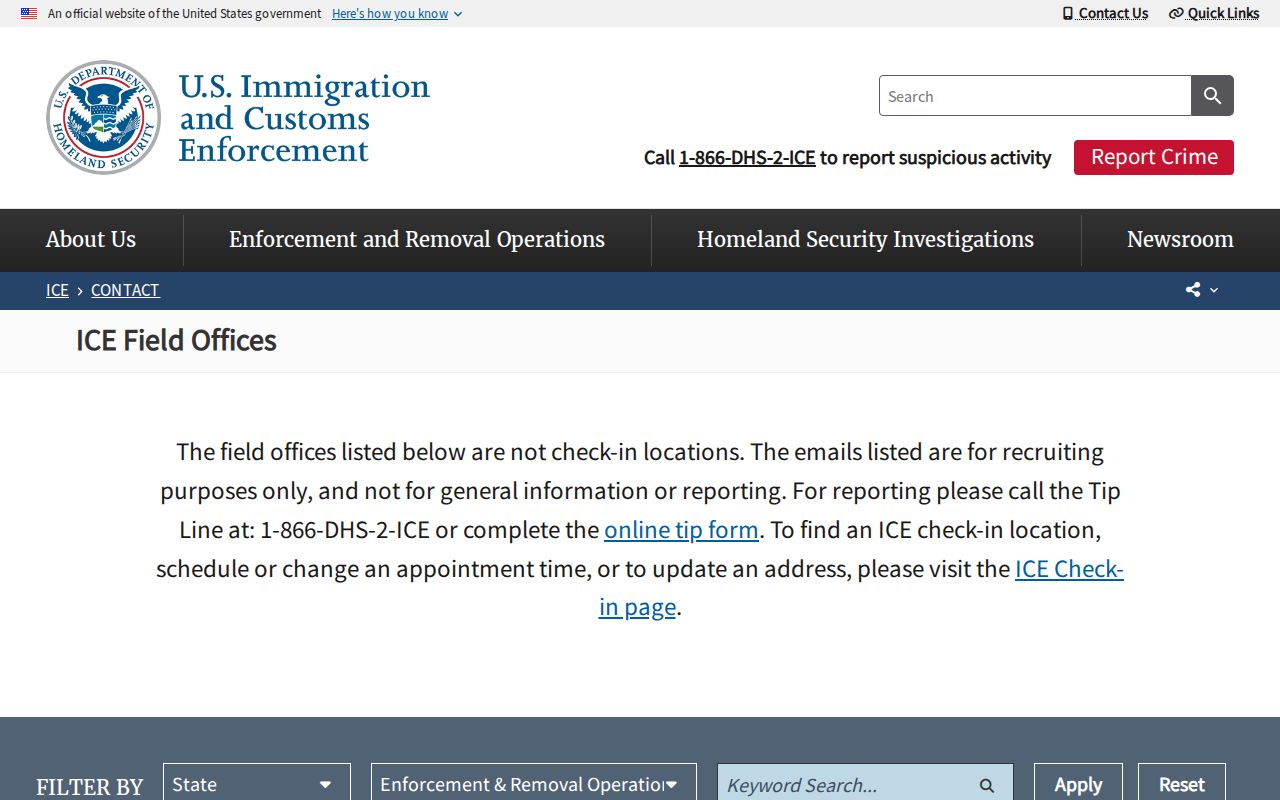
The official ERO contact page is the matched successful image available for this facility-system page. It helps route the inquiry to the agency responsible for immigration enforcement activity.
The contact route does not create a historical release database. Ask a defined question tied to the person and event. If a document is needed, request the existing custody, transfer, or release record through the applicable federal process rather than asking staff to create an explanation.
ICE Release Record Evidence
A reliable custody chain uses records from each authority. The Clinton County jail log establishes when local custody ended. The local court record can explain the criminal order or disposition. ICE records address civil immigration detention, transfer, release, or removal. These records should not be merged into one generic “release date.”
- Detainer
- A request or authority that may cause another agency to take custody.
- Transfer
- Movement between facilities or authorities while confinement continues.
- Release from ICE detention
- The end of the ICE detention reflected by the agency record.
- Removal
- An immigration outcome distinct from ordinary release into the local community.
For older events, the current locator is not enough. Seek immigration case records and the relevant ICE record. Preserve the A-number and exact date range. The Clinton County released-person search provides the county, state, federal, and immigration evidence ladder for tracing the custody sequence.
ICE Records Request Details
A focused request identifies an existing document. Include the person's full name, A-number, birth details, approximate detention dates, known facilities, and the event sought. Useful subjects may include a transfer record, detention-location record, or release-related record. The federal custodian determines access and any lawful restriction.
Do not submit a Kentucky Open Records Act request to Clinton County for an ICE-created record. Kentucky law governs the county records the local agencies possess. Federal rules govern federal agency records. A county record may still show that the jail transferred someone to ICE, while the immigration agency holds the later evidence.
When a local record is also needed, call the jail first to identify its custodian. No official Clinton County jail form, release-record fee, email, retention period, or turnaround was found. Ask for electronic delivery and request the legal basis for any withheld portion. Never assume the sheriff and jailer hold identical documents.
About the ICE Detention System
ICE detention is civil immigration custody. It is distinct from a criminal sentence in Clinton County, a Kentucky DOC prison term, federal pretrial detention managed by USMS, and federal sentenced custody managed by BOP. The correct search follows the authority, not merely the person's county connection.
No ICE contract facility was found physically in Clinton County in the official materials reviewed. A person may nevertheless be held in an ICE facility elsewhere after a local handoff. Do not import a facility from another state merely because it uses the Clinton County name. Kentucky, Albany, the originating agency, and the A-number should anchor the match.
A person can also leave ICE detention without appearing in Clinton County. The post-detention destination may be outside the county or country. State only what the official record proves and date the check because a current-location tool can change.
Verify an ICE Release
Close the search by stating the scope. “No current ICE locator result” is accurate. “Released from ICE detention” requires an agency or case record supporting that event. “Released from all custody” needs checks for any known county, state, federal criminal, or immigration hold.
Use at least two matching sources when possible. Pair the ICE record with the immigration case or ERO confirmation. Add the Clinton County release record when the path began at the local jail. Match the A-number, name, dates, agencies, and destination. This guards against confusing a transfer or removal with ordinary community release.
Preserve Clinton ICE Custody Dates
Record the date and time of each search because the ICE locator is built for current detention location. Save the A-number, spelling used, country of birth, date of birth, facility name, and responsible office shown. If the result later changes, that search log helps the agency identify which stage of the custody chain needs an official record.
A local jail timestamp and an ICE locator update need not match. Clinton County staff may complete a transfer before the receiving system displays the person. The reverse can also occur when a record remains visible during processing. Avoid assigning a cause to any lag unless the agency confirms it. Use exact phrases such as “county release recorded,” “current ICE location displayed,” or “no current locator match.”
Older immigration events need durable documents. A current no-match cannot show whether the person was released, transferred, removed, or held under another identity entry in the past. Ask ERO or the appropriate record custodian for the defined date range and event. Pair that response with the immigration case when the legal action must also be established.
Public Record Search
Sponsored Results